West Baltimore Churches - Baltimore, Maryland

West Baltimore is home to a lot of churches. As I pass through from time to time I have always promised myself I'd get organized about this. Finally, yesterday, I grabbed the camera and did as best I could within the small area of LaFayette Square and Dolphin Street. Taking the pictures was the easy part, matching the pictures with the names of the churches proved to be more difficult. I've visited this area so often that people know me so now I have friends in the area. The people here are very nice.

West Baltimore Churches


EveryTrail - Find the best Hiking near Baltimore, Maryland

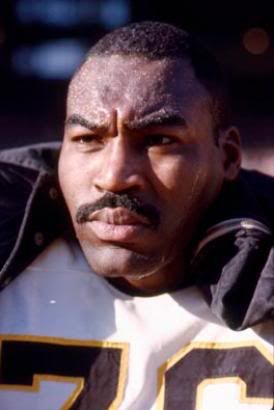
Eugene "Big Daddy" Lipscomb - his life in Baltimore

Click on the blue icons for fun facts about Big Daddy Lipscomb:

View Eugene Big Daddy Lipscomb in a larger map

Eugene Allan Lipscomb was a much-loved defensive tackle who played for the Baltimore Colts during the team's glory days of 1956 through 1960. Said Hunter S. Thompson in an ESPN column, "Gene 'Big Daddy' Lipscomb was arguably the cruelest pass rusher in NFL history. He was a violent junkie who invented the dreaded roundhouse whack upside the head -- directly on the ear-hole of his victim's helmet -- that often burst both eardrums of any hapless offensive linemen he could reach. Big Daddy weighed 300 pounds and he really wanted to hurt people. And he did -- but he is not in the Hall of Fame."

Not only is he not in the NFL Hall of Fame but Eugene Lipscomb has nearly disappeared from the annals of Baltimore history.

Gene Lipscomb was born in Alabama in 1931, his father died early and his mother, Carrie, moved the family to Detroit when Gene was 3. When he turned 11 his mother was brutally stabbed to death on a Detroit street corner, Gene sound found himself living with his maternal grandparents and working the 12AM-8AM shift at a steel-pickling plant to pay for his room and board while he attended Miller high school. Even with a demanding work schedule the 6' 4" 220 pound boy found time to participate in the schools sports teams where he excelled due to his massive size. After high school he joined the Marines and was recruited to play on the football team at Camp Pendleton. Big Daddy never attended college and was recruited directly to Los Angeles Rams in 1953. With the Rams he was known for frequent fights with both opponents and teammates, the Rams quickly grew impatient with him and released him.

What Big Daddy needed was a new home where a rambunctious personality would be an attribute not a hindrance. Baltimore was only too ready to embrace him. The Colt's coach, Weeb Ewbank quickly paid the $100 claim fee and the rest becomes Colts football history. Big Daddy found a support system among friends, Lenny Moore, Johnny Sample, Milt Davis and Sherman Plunkett the sky became the limit. Back then there was not much formal coaching for the team and the veteran player such as Gino Marchetti, Artie Donovan and Don Joyce would share their tips and tricks with the new recruits. Lipscomb became a dominating defensive player who played on two Colts championship teams. Sports Illustrated William Nack wrote a lengthy piece about Big Daddy in 1999 with this quote, "He was, in fact, the prototype of the modern lineman, the first 300-pound Bunyan endowed not only with enormous power but also with the two qualities usually denied men of his size: agility and speed. His belly did not roll out of his pants. He was hard and trim, and the fastest interior lineman in the league."

Not only did Big Daddy play professional football with the Baltimore Colts but during the off-season he he would tour the Midwest and California with the United States Professional Wrestling association, under the name "Waffle Ear". Big Daddy also maintained his love of basketball and signed on with the Eastern Basketball League in January of 1961. This resulted in a legal mess. NFL players could not sign professional contracts with other leagues, especially ones that were rife with gambling scandals, like the EBL at the time. The EBL president sued Pete Rozelle in a $1 million defamation case. This most likely contributed to Big Daddy Lipscomb being traded to the Pittsburgh Steelers for the 1960 season. Big Daddy played 2 more seasons for the Pittsburgh but continued to make return visits to Baltimore.

During that era Baltimore was a segregated town. Although the Colts players behaved like a family on the field, off-field was a different story. The white players and black players became 2 separate and distinct cliques. Pennsylvania Avenue was a hotbed of entertainment for middle-class black Baltimoreans and Big Daddy enjoyed his fame and reverie at the jazz clubs that line the street along with fellow Colt's players Jim Parker, Luke Owens, Sherman Plunkett, Johnny Sample, Lenny Lyles, Jessie Thomas, Milt Davis and Buddy Young. Big Daddy could be spotted at the Sphinx, Comedy Club, Casino Bar and Avenue Bar. Off the avenue he could be found in Walbrook Junction at the Rail Inn or at the Uptown Bar at the corner of Monroe and Edmondson. He would imbibe heartily, his favorite and only drink of choice was Seagrams VO. Big Daddy also developed a reputation for being generous. He would buy groceries for those without food, and give money to those who had none. There was a tale of him buying shoes and clothing for a boy he had found barefoot.

When Mr. Lipscomb first came to Baltimore he lived at his own apartment on Baker Street near Poplar Grove, later he moved in with his 3rd wife, Cecelia Williams, to a place between Hilton at Ellamont Streets in Gwynn Oak. Finally, his marriage over, he moved in with Sherman Plunkett and his wife at Plunkett's large home at 3314 Elgin Avenue in Gwynn Oak. While on the road during football season the black team members would stay in hotels that were hospitable to African American football players, the white players would often stay at different lodgings. The late 50s was a time for separation by skin pigmentation.

Lipscomb's colleagues and fellow players knew something about Big Daddy that Colt's organization and fans did not. Big Daddy was a highly troubled man who had erratic mood swings. One day he would be everyone's favorite cut-up, comic and raconteur at team practice, another day he would appear scowling, sullen and unapproachable. At night at Plunkett's house he would place his bed up against the door so no one could get in. He'd tie Plunkett's giant dog to the foot of the bed to protect him. Big Daddy suffered bouts of insomnia. At the Colt's training camp at Western Maryland College he would pace the halls at night. Team player, Luke Owens, remembers that Big Daddy could often be found lamenting that it was a sad day while he sobbed. Lenny Moore would accompany Big Daddy out at night and once while both were in a cab Big Daddy burst into tears. Mr. Moore asked him what was wrong and Big Daddy replied, "Ah, the Daddy ain't right. The Daddy ain't right." Eugene Lipscomb also kept in his possession a passel of photographs from his mother's murder scene taken by a homicide photographer including gruesome photos of his mother's body, this may have been a clue as to what ailed Mr. Lipscomb. As a young man, Eugene Lipscomb's grandfather had once tied him to a bed, stripped him and beat him for stealing a bottle of whiskey. His grandfather, Charles Hoskins, did not believe in sparing the rod to spoil the child. The wounds of an emotionally brutal childhood sometimes last a long time.

This is probably why Eugene Lipscomb found alcohol so enticing and perhaps necessary to take the edge off. When the players went out of the town, many of them would head to the bar to loosen up and grease the social wheels with a beverage or two. While in Pittsburgh, quarterback Bobby Layne would buy his teammates a drink at the local watering hole after practice, but for Big Daddy he would buy him an entire bottle of VO. Big Daddy was also known to occasionally smoke some marijuana.

While with the Steelers, Big Daddy was just as popular in Pittsburgh as he was in Baltimore. At the end of the second season during the 63 Pro Bowl he had one of the greatest performances of his career: 11 tackles, two forced fumbles and one blocked pass.

After Big Daddy's second successful year with the Steelers he returned to Baltimore for the off season in 1963. He also returned to socializing in his old stomping ground of West Baltimore, hanging with his old friends and former Colts teammates and also began to recourt his exwife, Cecelia. One night in May he went out on the town after playing softball in the afternoon. He met up with a local man named Timothy Nathaniel Black, and they ended the evening at Mr. Black's home in the 400 block of North Brice Street. It was there that the 2 men shot up some heroin that they had purchased earlier on Pennsylvania Avenue with a homemade syringe. Soon after, Big Daddy fell to the floor while Mr. Black tried revive him by rubbing ice cubes on his skin and injecting him with salt water. The attempts at revival failed, Big Daddy died on May 10, 1963 at the age of 34.

Eugene Allen Lipscomb was laid out for viewing at the Charles Law Funeral Home at 802 Madison Street on May 12, 1963. Over 30,000 people came to say their goodbyes. Mr. Lipscomb was laid to rest at the Lincoln Memorial Park in Macomb County, Michigan.

Rudiger Breitenecker, who did the autopsy, found only four fresh needle marks on Lipscomb's body, accounting for the deadly heroin dose and the saline injections, and only one old one, which could have been left by "an old blood test". With only 4 fresh needle marks it was clear that Mr. Lipscomb was not a frequent heroin user. What the medical examiner also found surprised no one: a fatty liver. "If he hadn't died from heroin, he would have died from liver disease due to chronic alcoholism," Breitenecker says.

It was a well-known fact that Big Daddy was deathly afraid of needles and it was odd that the heroin injections were in his right arm. It would have been almost impossible for Big Daddy to inject himself on the right side, as he was right handed. The medical examiner deduced there was 5 times the amount of heroin in his body that would have killed just one man. In 1963 the potency of street-level heroin would vary greatly. It depended on how often the drug was cut and diluted, depending on how many hands the product was passed and each dealer's intended profit.

The untimely death of Mr. Lipscomb should have sounded some serious warning bells about what was to come in the years after the death of Big Daddy. Or perhaps, somebody should have noticed earlier when singer, Billie Holiday, died in 1959 due to complications associated with the use of heroin. America should have recognized that something was a bit awry with the returning veterans of the Viet Nam War during the 70s who suffered from Post Traumatic Stress Disorder and found that heroin could diminish its side effects. Had the government crafted a successful solution for those who were desperate to self-medicate, anxious to find some relief for their depression, mania, ADD, OCD and general discontent the country might not have ever experienced the debilitating drug epidemic and the violence that came with it during the 70s, 80s, 90s, and continues well into this current millennium.

How to File a Complaint against a Baltimore City Police Officer

As a local citizen un-affiliated with the Baltimore City Police Department or any office of the Baltimore City government I would like to provide a few tips on some options to file a complaint against a Baltimore City Police Officer. I know of the 3 avenues of which to initiate a complaint. I would like to describe the pros and cons of each one.

1) Filing your complaint directly with the Baltimore City Police Department

2) Filing your complaint through your Baltimore City Council Representative

3) Filing your complaint through the Baltimore City Mayor's Office


The pros and cons of filing your complaint through the Baltimore City Police Department

One is free to call, email or visit the police location of your choice mentioned in this information about complaints from the Baltimore Police Department. However, I must forewarn you. Asking the Baltimore City Police Department to investigate the Baltimore City Police Department is a giant waste of the effort you put in to file the complaint. There is a big chance your complaint will go nowhere. The police are in the business of furthering the best interests of the police and not your specific concerns regardless of whether you vote, pay taxes and are local pillar of the community here in Baltimore City. The Baltimore City Police Department doesn't care about you.


The pros and cons of filing your complaint with your City Council Representative

This step only works if you live within the boundaries of Baltimore City. It helps a great deal if you have voted in the last city election and it helps even more if you are a registered Democrat. There are couple steps in the process of filing a complaint with your City Council Representative. First you must find out which city council district in which you reside using this map.

Then I suggest going to this page which lists the contact information for the council member in each district and obtaining the email and the phone number for your associated council representative.

You have two choices. You can either email your city councilperson with a short description about what happened and that you want to file a complaint or you can call your city council office and talk to your council person's assistant. The city council tends to meet on Mondays and Wednesdays at 5PM. The chances of someone picking up the phone in the associated council offices increases exponentially on Mondays and Wednesdays in the afternoon. I suggest calling first and getting some direction and input from the council representative's assistant on what to do. They may suggest your write an email outlining exactly what happened so they know what is going on, how best to help you and inform the associated council member.

This is my favorite avenue for filing a police complaint. Many of our local council representatives have had to play the role of defendant in their personal lives. Many of them are not friends of the Baltimore City Police Department. They are aware of the bullying tactics the Baltimore City Police use against the citizenry. Council representatives are usually pretty anxious to help out their constituents because they face reelection every 4 years and welcome an opportunity to make a new friend. They are often extremely interested to know if there is a rogue cop in their district on the loose.

If your city councilperson wishes to help you out, they may forward your email and concern to the Major at the appropriate police district. Once that occurs the complaint will go to an investigator within the district office and the investigator will contact you, either by phone or in person. Your complaint will be processed and an investigation will ensue.


The pros and cons of filing your complaint through the Mayor's office.

The Baltimore City Mayoral Representatives turns over at a frightening pace. Some mayors move on to greener pastures, some get indicted. However, this mayoral email address goes to whatever mayor is in place down at City Hall at the moment. You are free to use it to write your email complaint directly to the mayor. Or you can use this Baltimore City mayoral contact form.

The mayor's office forwards complaints to the Baltimore City Police Department's Chief of Patrols office. From there you will be contacted by a Patrols Office Detective. They will take your complaint and then initiate an investigation as needed. This methodology certainly brings results but it is a little slow.


Now that I have filed my complaint what can I expect from the investigator?

Once the police investigation is initialized I would strongly recommend you have the investigator access the associated police report for the incident, and have them get back to you once they have it. From the investigator you should ask for the names of the officers involved in the incident, their rank and which police district with which they are associated. You should also write down the police report number of the incident. Either have the investigator send you a copy of the report or have them read it to you over the phone. You can be amused and entertained to find that the content of the report most likely be the exact opposite of what you perceived happened during the incident. These police reports are often police CYA measures. Make sure you clarify how the police report is misleading or all-together false with the investigator.

It is up to you to follow up with the investigation. Don't hesitate to ask for the name and number of the investigator and make the phone call to find out the result of the investigation.

Homeless Census 2011 - Track for Port Covington/Riverside - Baltimore

4 other people and I had some fun driving around South Baltimore looking for homeless people this morning, between 12AM and 3AM. We found 5 people and did 1 survey. This is our track:


View Port Covington Homeless Census 2011 in a larger map

Patapsco Valley Mill Sites - Baltimore and Central Maryland

156 Mills, Foundries and Tanneries


View Patapsco Mills in a larger map

If you are looking for the location of a specific mill, click on this sentence link and used the index on the left of the Google Map to locate it. These sites are listed in the book A Guide to Patapsco Valley Mill Sites by James Walter Peirce. I made a few minor changes due to my knowledge of various mill sites. If you want to know more about each mill you should either buy the book or borrow a copy from your local library.

For those that just want to download a gpx file for use with their GPS or want a simple way to get this map to work with their iPhone, you can click on the Everytrail map below and then work with that site:

The Mills of the Patapsco Valley at EveryTrail


Below is a list of he mills that are annotated:

Aetna Powder Mill, Allen Grist Mill and Saw Mill, Ashley Ballemeno Mill, Asquiths Mill, Avalon Mills, Baltimore & Cuba Mining & Smelt,Baltimore Copper and Smelting, Baltimore Gunpowder Manufactory, Baltimore Iron Works, Bankert Grist Mill,Bartlett Hayward Foundry, Baskey Saw Mill, Batwood Mill, Beards Grist Saw Mill, Bellona Powder Mill, Bells Mill, Bentz Grist and Saw Mill, Blakely Mill, Bloom Grist Saw Mill, Bonds Saw Mill, Bonnie Branch Mill, Bowen Grist Mill, Brandenburg Grist Mill, Buffington Mill, Burgess Grist Mill, Burnham Saw Mill, Bushy Grist and Saw Mill, Calverton Mills, Carrolls Mill & Furnace, Carrolton Grist Mill, Chesapeake Furnace, Clipper Mill, Cockeys Mill,Comet Roller Mill, Cornthwaites Mill, Danb Mill, Daniels Albertson Cotton Mill, Davis Mill,Days Grist Mill, Devries Fulling Mill, Dorsey Paper Mill, Dorseys Furnace, Druid Cotton Mill, Ebaugh Fulling Mill, Elba Furnace, Elkridge Furnace, Elkridge Paper Mill, Ellicotts Iron Mill, Ellicotts Lower Mill, Ellicotts Upper Mills, Elseroad Saw Mill, Elys Grist Mill, Fitche Mill, Fites Mill, Franklintown Grist Mill, Frick Saw Mill, Gardiners Mill, Gillis Saw Mill, Gosnell Saw Mill, Grays Cotton Mill, Green Grist Mill, Groffs Mill, Hammors Grist and Saw Mill, Hansons Mill at Belvedere Bridg, Hansons Mill,Harris Fulling Mill, Hawes Grist Mill, Heiser Grist and Saw Mill, Hockley Forge, Hockley Grist Mill, Hoffman Paper Mill, Hollingsworth,Hoods Mill, Hoods Grist Mill, Hooperwood Textile Mill, Hopkins Grist and Saw Mill, Howard Cotton Factory, Hoys Mill, Hudsons Mill, Ivy Paper Mill, Jackson Foundry, Jacobs Grist Saw Mill, Jamisons Powder Mill, Klees Mill, Lawrencas Grist Mill, Lees Mill, Lewis and Shelby Grist-Saw Mill, Lloyd Grist and Saw Mill, Lyons Mill, Maryland Copper, Matthews Saw Mill,Meadow Cotton Mill, Mentzells Paper Mill, Merriweather Mill, Merriweather Grist Mill, Milford Grist and Saw Mill, Moores Mill,Mount Clare Grist Mill, Mount Royal Forge, Mount Vernon Cotton Factory, Mount Washington Cotton Mills, Oakland Mills,Odells Grist Mill, Orange Grove Flour Mill, Owings Middle Mill, Painters Mill,Park Mill, Pigott Grist Mill, Plummers Mill, Pohattan Cotton Factory, Poole and Hunt Foundry, Red Run Grist and Saw Mill, Richards Grist and Saw Mill, Richards Grist Mill,Rockland Cotton Mill,Rogers Forge, Rogers Lime Kiln and Mill,Rutter Mill, Saes Tannig Mill, Saint Marys Mill, Schaffer Grist Mill, Schlossett Tannery, Selby Grist Mill, Shamberger Grist and Saw Mill, Showey Grist Mill, Simkins Paper Mill, Smiths Leather Tannery, Soapstone Grist and Saw Mill, Soapstone Paper Mill, Sparrows Point, Springfield Roller Mills, Stevenson Copper Furnace, Stickney Furnace, Stimix Mill, Stockdale Grist and Saw Mill, Stowe Mahogany Mill, Strausbau Grist Mill, Tamanus Mill,Tentsfield Saw Mill, Thistle Mill, Thompsons Saw Mill, Tschudi Mill,Union Manufacturing Company, Union Saw Mill, Vachael Dorsey Mill,Valley Grist Mill and Saw Mill, Vinegar Mill, Welles Grist and Saw Mill, Whalen Grist and Saw Mill, Whipps Mill, Wilkins Rogers Flour Mill, Wind Mill, Windsor Mill, Winters Grist Mill,Woodberry Grist Mill, Worthington Saw Mill